The Book
A field guide for understanding trauma, building emotional control, and moving forward
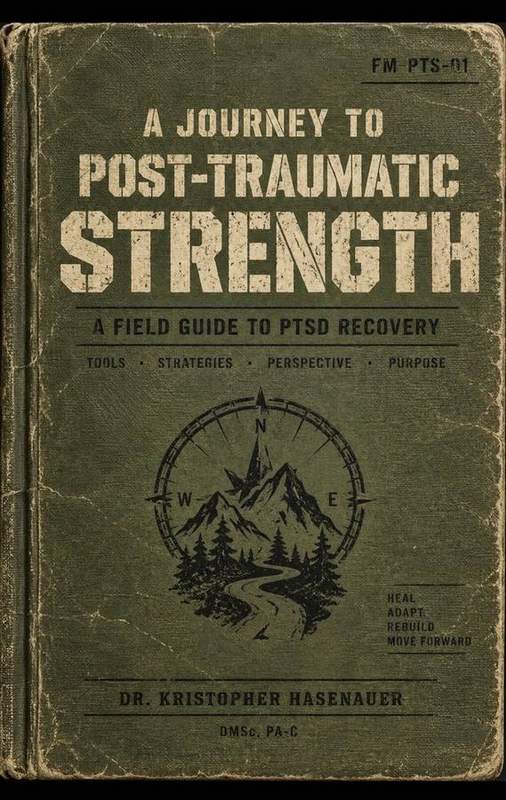
Why I Wrote This Book
I did not write this book because I studied trauma from a distance. I wrote it because I have lived it.
For much of my adult life, I served in environments where strength, resilience, and the ability to keep moving forward were expected. As a Special Forces medic, military officer, and later a clinician, I learned how to take care of other people during some of the most difficult moments of their lives.
What I did not always know was how to take care of myself.
I have had my own struggles with post-traumatic stress disorder, alcohol, and suicide. There were times when the things I had experienced, combined with the ways I tried to cope with them, took me to places I never imagined I would go.
Those experiences changed me. They also changed the way I think about trauma and recovery.
We knew how to survive. What many of us did not know was how to find peace after survival.
That realization became part of the reason I pursued my doctorate in behavioral medicine. I wanted to better understand what happens in the brain and body after trauma. More importantly, I wanted to understand what we could actually do about it.
A Journey to Post-Traumatic Strength is not about pretending trauma never happened. It is not about telling someone to simply move on, think positively, or forget experiences that may have fundamentally changed them. It is about understanding how those experiences affected you and developing practical tools to regain control of your life.
My hope is that these lessons can help veterans and first responders recognize what is happening before they reach some of the places I reached.
You do not have to wait until everything falls apart.
If this book reaches one person early enough — if it helps someone recognize what is happening, have a difficult conversation, ask for help, put down the bottle, reconnect with someone they love, or simply make it through another night — then writing it was worth it.
I cannot promise that the road forward will be easy. Mine was not. But trauma does not have to write the final chapter of your life.
There can be purpose. There can be connection. There can be peace. And there can be strength.
That is why I wrote this book.
— Dr. Kristopher Hasenauer, DMSc, PA-C
Inside the Book
Twelve chapters structured as a 12-week journey. Each chapter introduces a key idea, explains why it matters, and connects it to practical skills — with reflection questions and an activity page at the end of every chapter.
- Chapter 1: Understanding Trauma, Emotions, and the Road to Strength
- Chapter 2: PTSD Symptoms, Coping, and the Power of Emotional Intelligence
- Chapter 3: Combat Stress, PTSD, and Coping Strategies That Work
- Chapter 4: Adaptive Coping and Relationship Management
- Chapter 5: Emotions, Feelings, and Your Brain
- Chapter 6: Interoception, Self-Regulation, and Your Signature Emotion
- Chapter 7: Trap It, Map It, Zap It
- Chapter 8: Moral Injury
- Chapter 9: Root Cause and Core Beliefs
- Chapter 10: Gaining Control of Your Core Beliefs
- Chapter 11: How We Live — Behavior Types
- Chapter 12: Post Traumatic Strength — You Made It
This book is educational and is not a substitute for individualized medical or mental health care.